
Brumadinho Memorial: Memory Lighting Design in Brazil

A Legacy of Light. Six years after the disaster, the Brumadinho Memorial stands as a beacon of remembrance. Its architectural lighting, led by Atiaîa Lighting Design, proves that even in darkness, light can honor the past and inspire change. Made in collaboration with the architect Gustavo Penna Arquiteto e Associados, this sensitive work received the 2026 IALD Awards of Merit, the [d]arc awards 2025 in the Spaces category, and the LIT Lighting Design Awards 2025 as the Architectural Lighting Design of the Year.
For Mariana Novaes, the lighting designer, the project was personal. “We didn’t just design a space. We gave voice to those who couldn’t speak,” she said. The memorial light doesn’t just illuminate, it remembers.
Brumadinho Memorial Lighting Design
- The Place of Tragedy and Memory
- Lighting Design as a Narrative Force
- Entrance Pavilion Facade: A Threshold of Grief
- The 230m Cleavage Path: A Journey Through Rift
- Meditation Space: A Connection to Nature and Community
- Ceiling’s skylights and quartz crystals
- Square Sculpture and Reflective Lake
- Sustainability in Lighting Design
- Light as a Tool for Healing
- Offres d'emploi en éclairage professionnel
- Commentaires

The Place of Tragedy and Memory
Brumadinho is a small town 442 km North from Rio de Janeiro in Brazil. It became a symbol of human suffering in 2019. A dam collapse released 12 million cubic meters of toxic waste, killing 272 people and affecting 26 municipalities. The Brumadinho Memorial, opened in 2025, stands as a tribute to those lost. Designed by Gustavo Penna Arquiteto e Associados and Atiaîa Lighting Design, it blends architecture, landscape, and light to create a space for reflection.
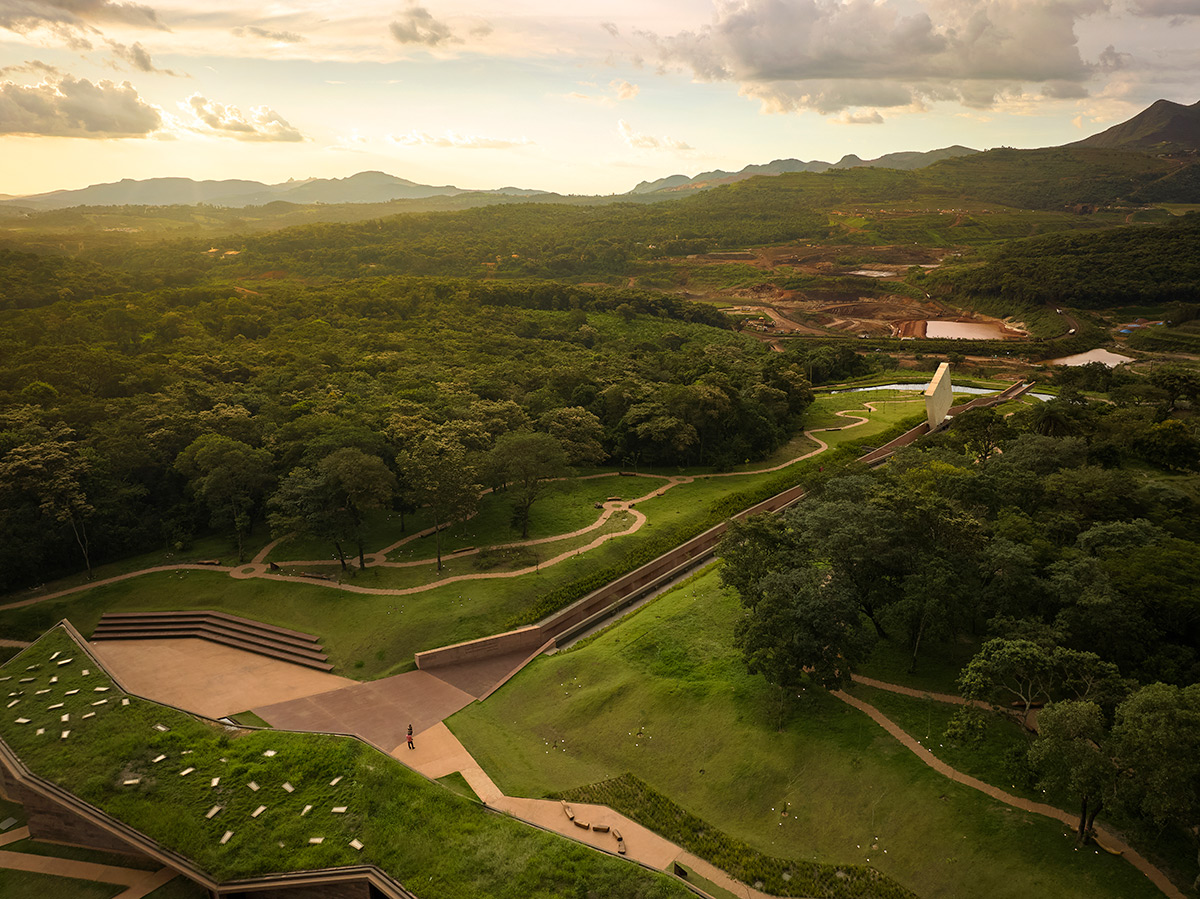
The memorial’s location is deeply symbolic. It sits at the exact site of the dam failure, where families still search for remains. Its design avoids grandeur, focusing instead on raw materials like concrete stained with mining waste. This choice mirrors the tragedy’s brutality. The structure’s fragmented form and red pigment evoke the mud that buried victims during lunch.
Lighting Design as a Narrative Force
Atiaîa Lighting Design’s project transforms light into a story of loss and resilience. The goal was to balance visibility with reverence. Visitors should feel guided, not overwhelmed. Challenges included avoiding harshness while ensuring key symbols, like 272 ipê flowers and stars at night, were visible.
The results are emotional. Light highlights the 272 ipê flowers, each representing a victim. Each sculpture “weeps” over concrete, its tears mimicking mining waste. Fiber optics create a starry sky over a memorial lake, symbolizing the lost “jewels” of victims. For Mariana Novaes, the lead lighting designer, light here is not just illumination. It’s a conversation with memory.

Entrance Pavilion Facade: A Threshold of Grief
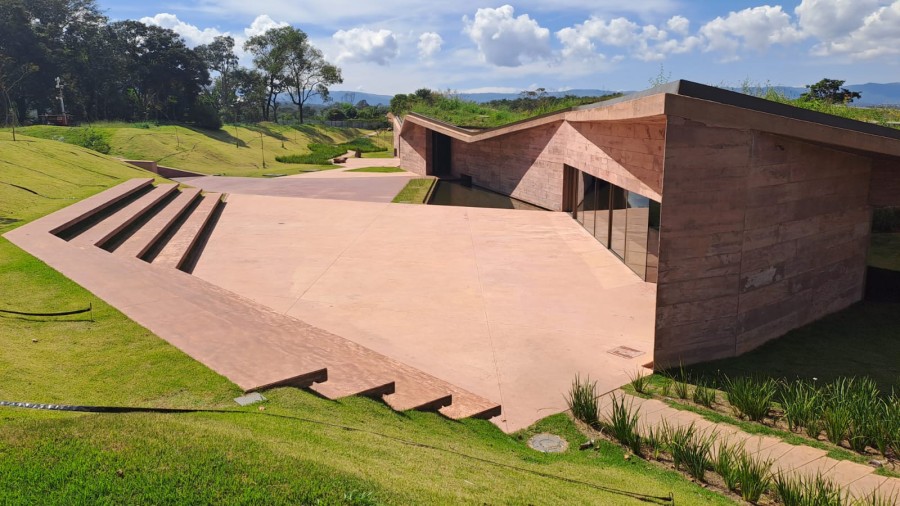
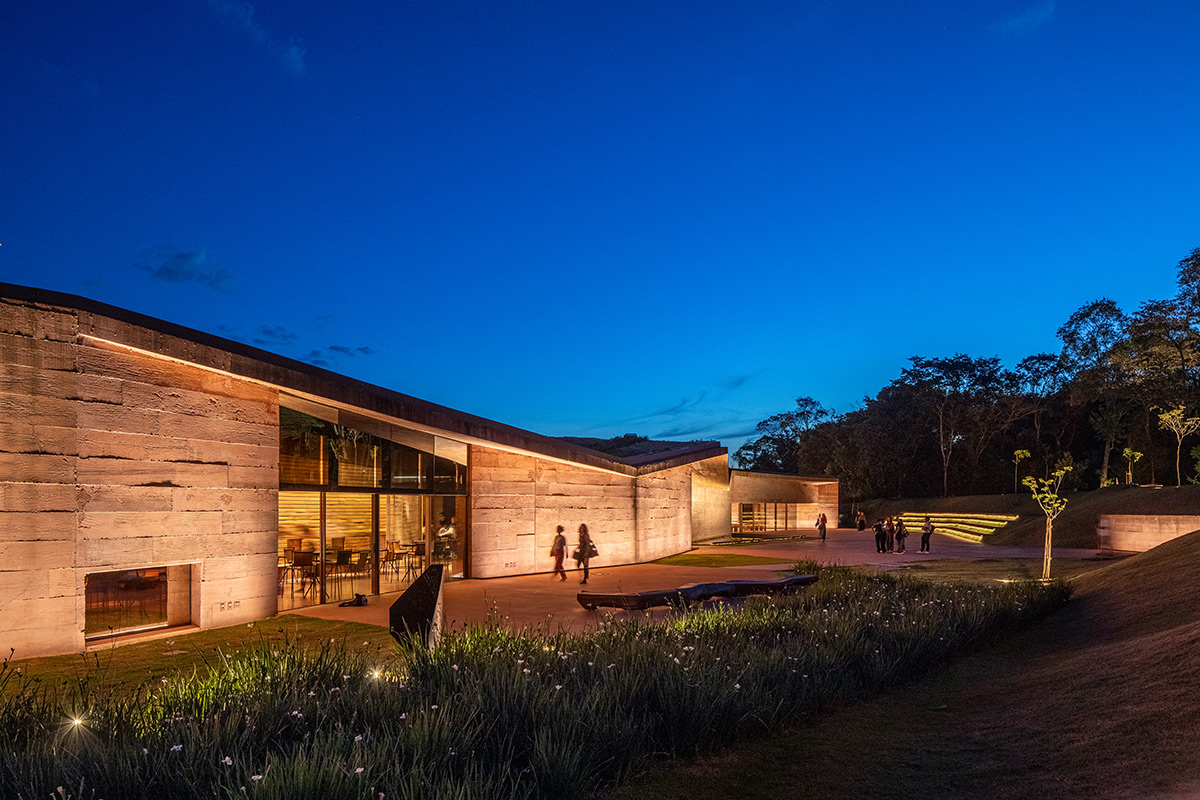
The entrance pavilion facade is a minimalist, twisted concrete structure. Its form reflects the shock of the collapse. Concrete is colored by a red pigment extracted from the toxic iron ore waste.
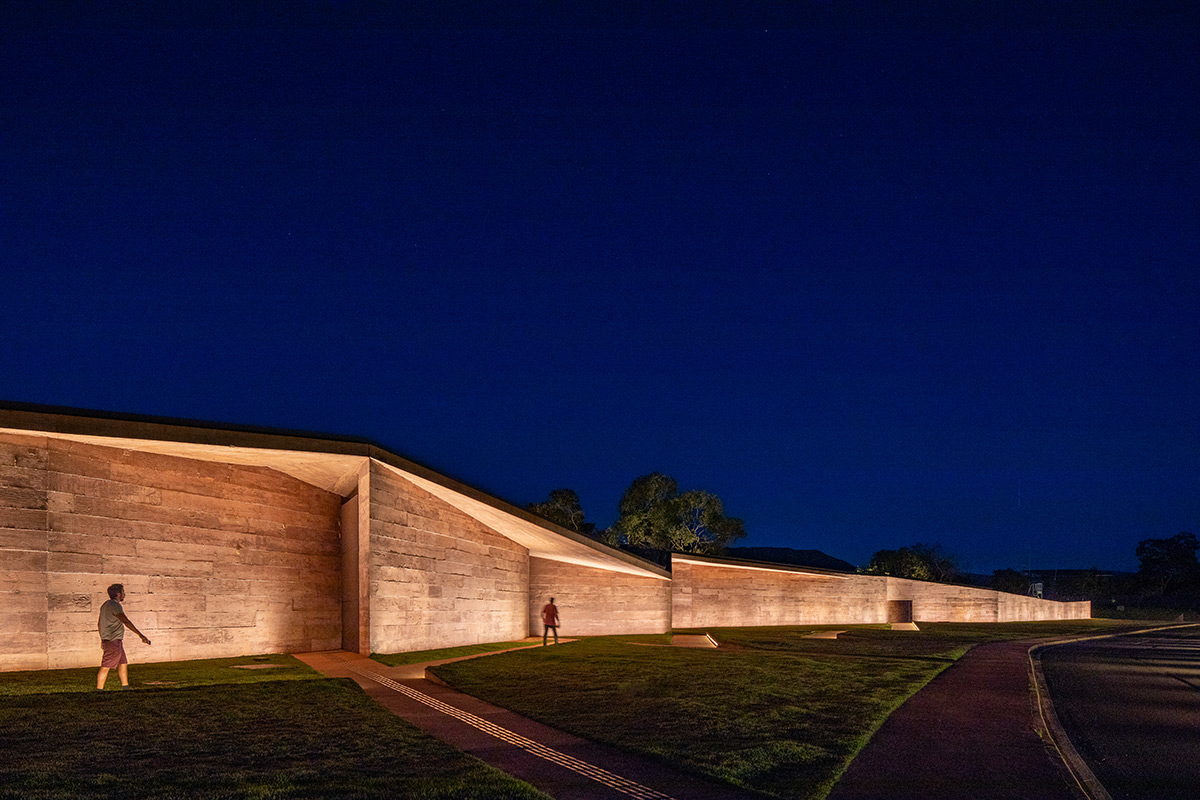
Warm white light 2700K welcomes visitors, creating a sense of safety. Grazing lights highlight its textured walls, while skylights cast fragmented light inside. This mimics the chaos of the disaster.
The 230m Cleavage Path: A Journey Through Rift
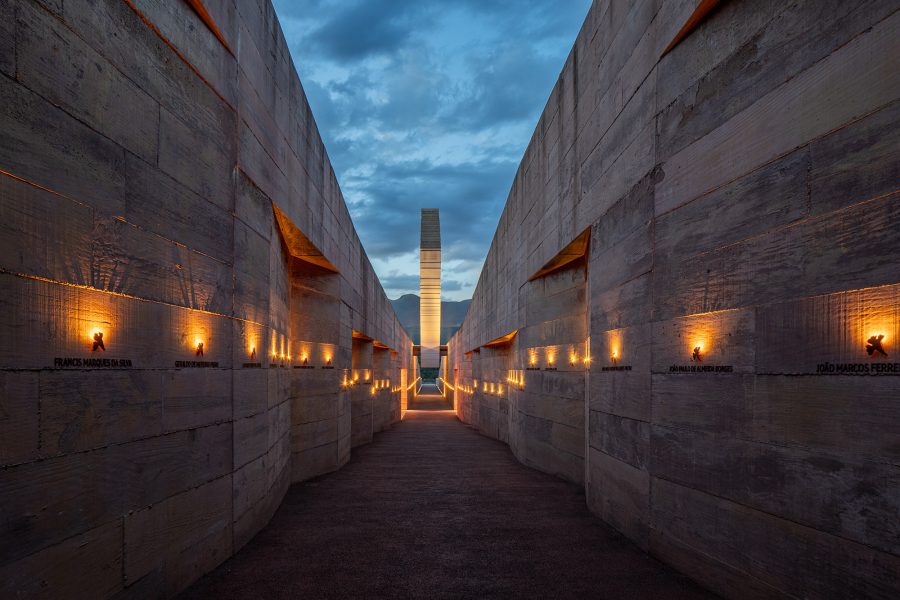
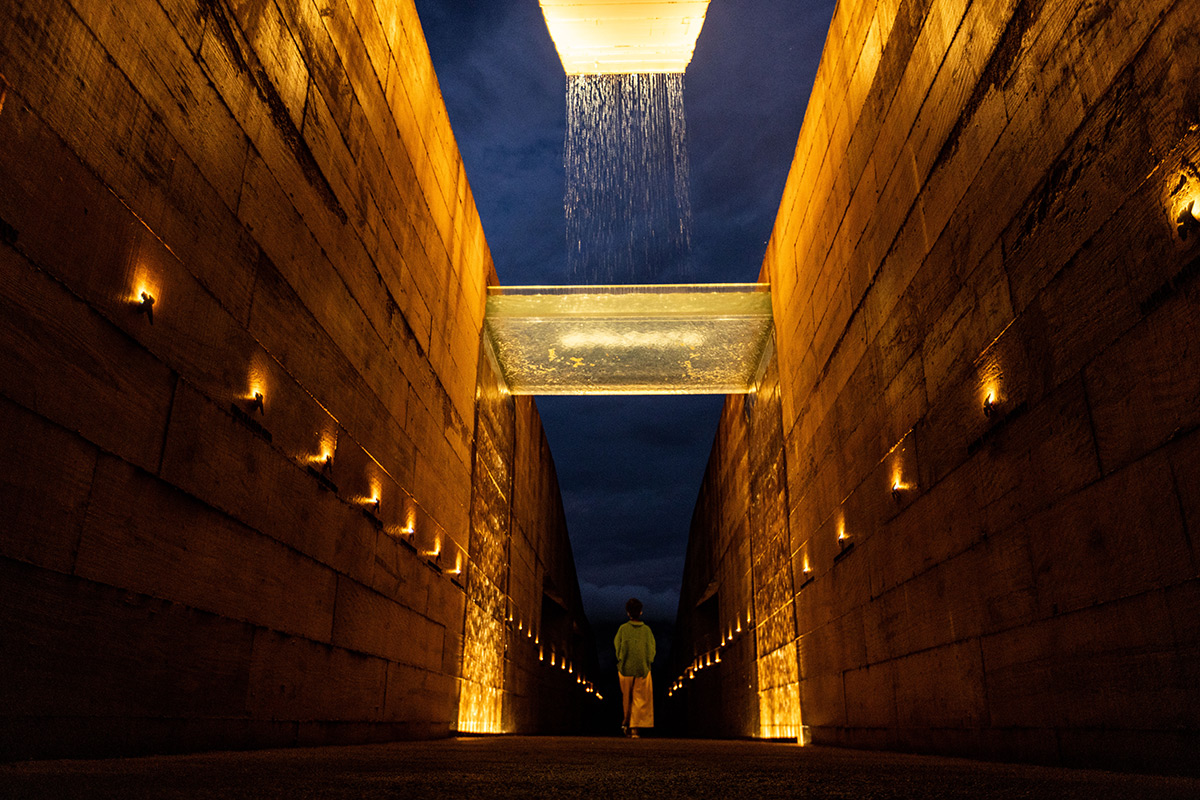
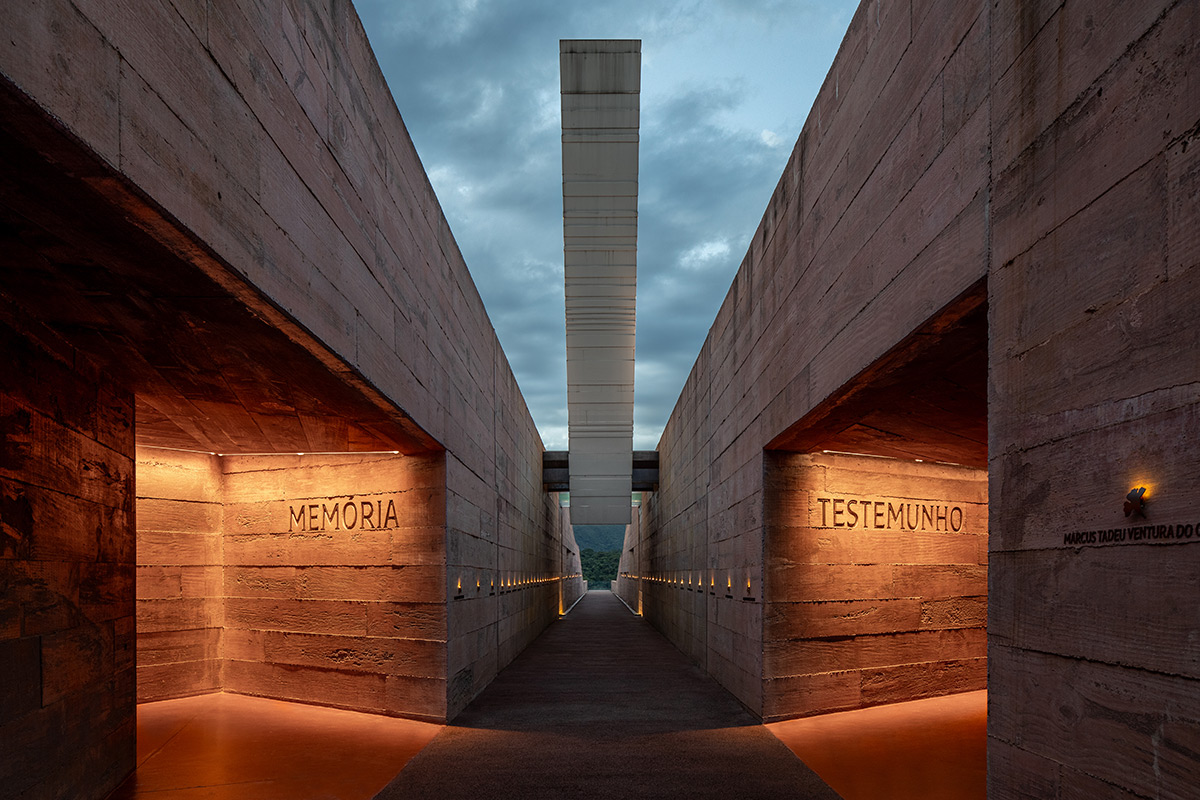
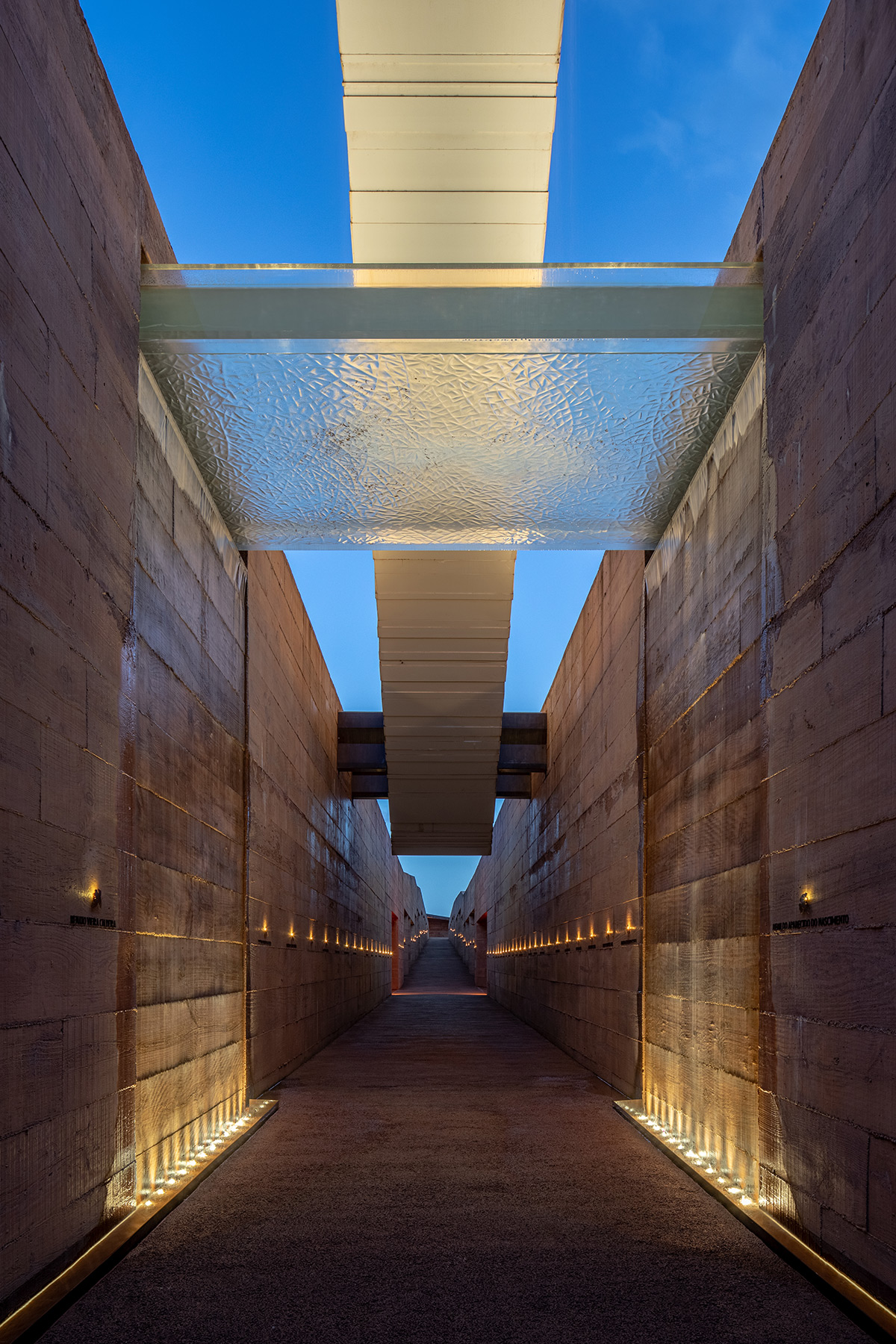
A 230-meter path carved into the earth leads visitors to the memorial’s core. This “cleavage” symbolizes the rift between life and death. Along the way, 272 ipê flowers line the way, their white blooms glowing softly.
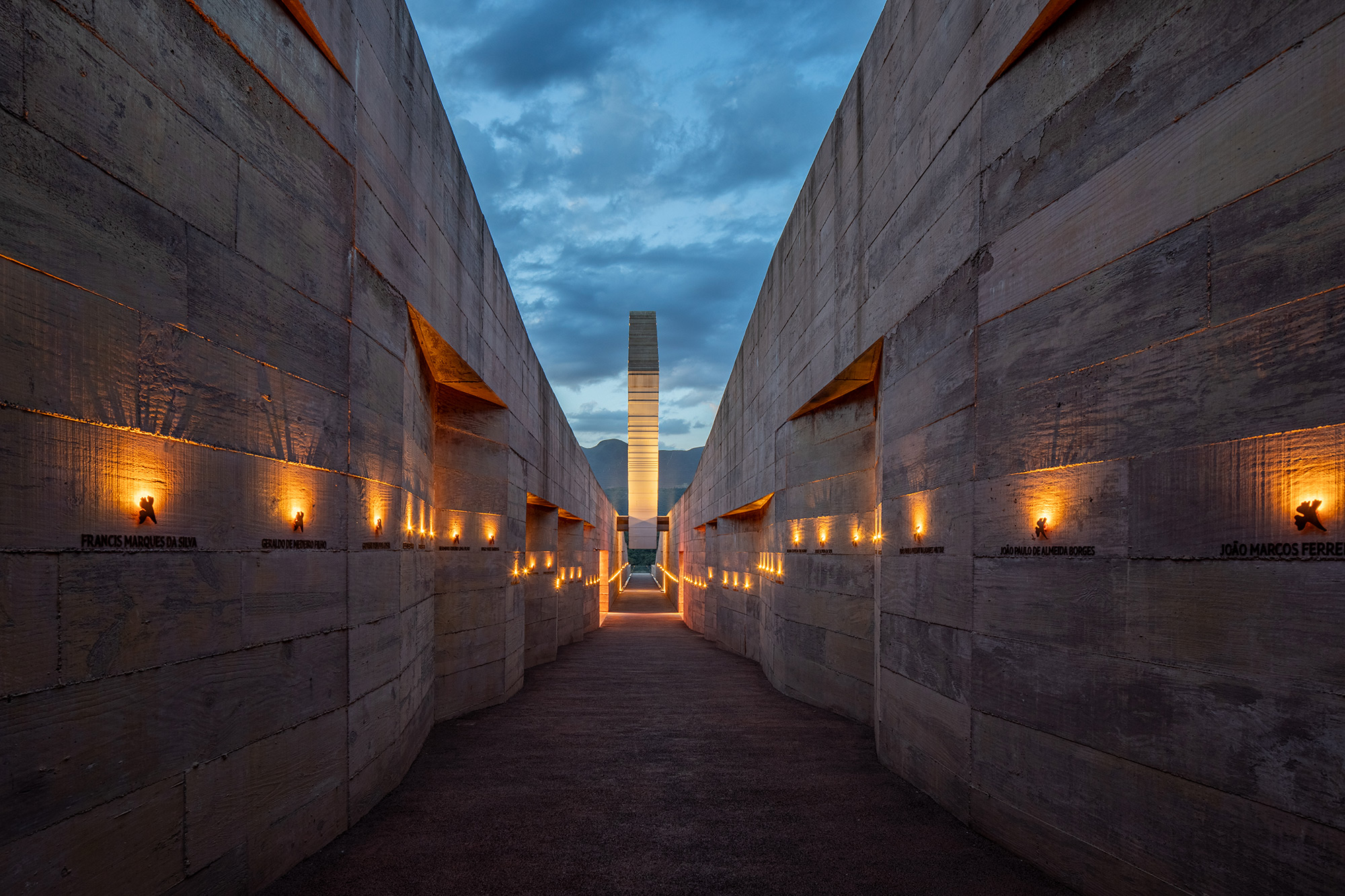
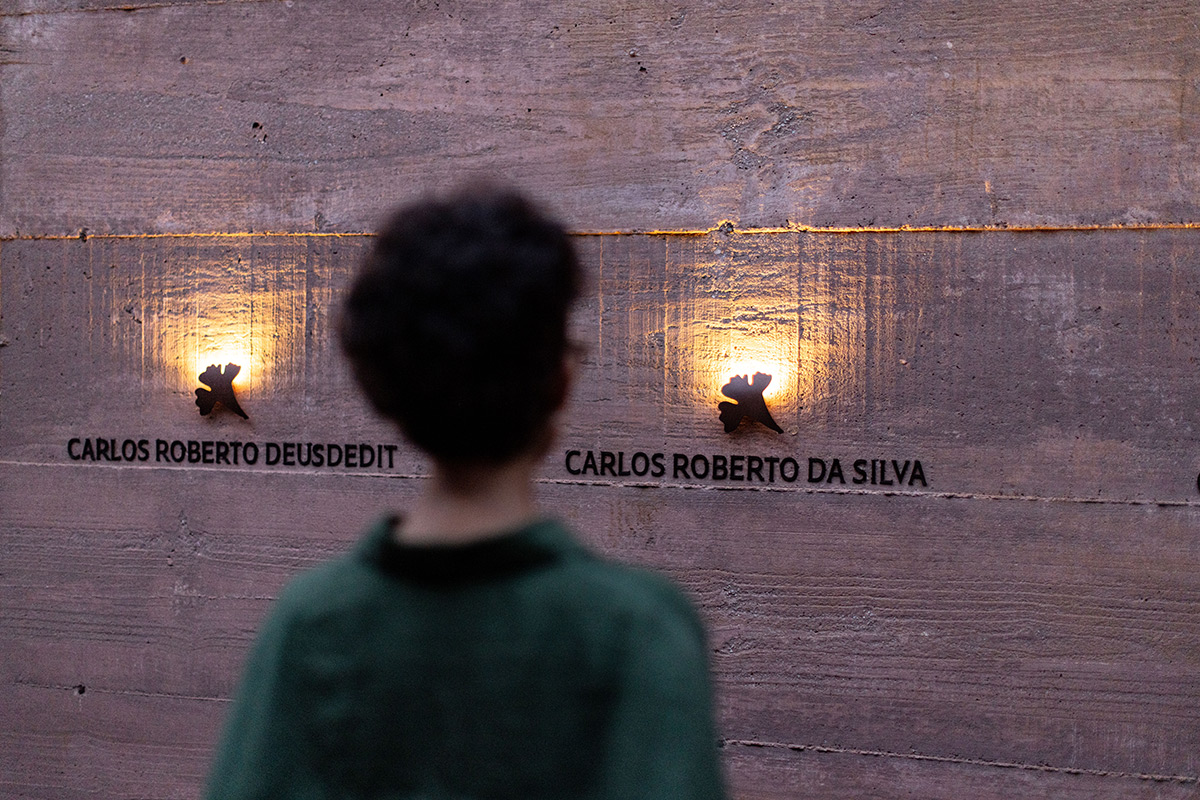
Lighting design here uses inground fixtures and fiber optics. Cool white light 4000K emphasizes the path’s jagged walls. Fiber optic terminals shaped like ipê flowers line the walls, displaying victims’ names. The path’s lighting is subtle but directional, ensuring visitors don’t miss the names etched in concrete.
Meditation Space: A Connection to Nature and Community
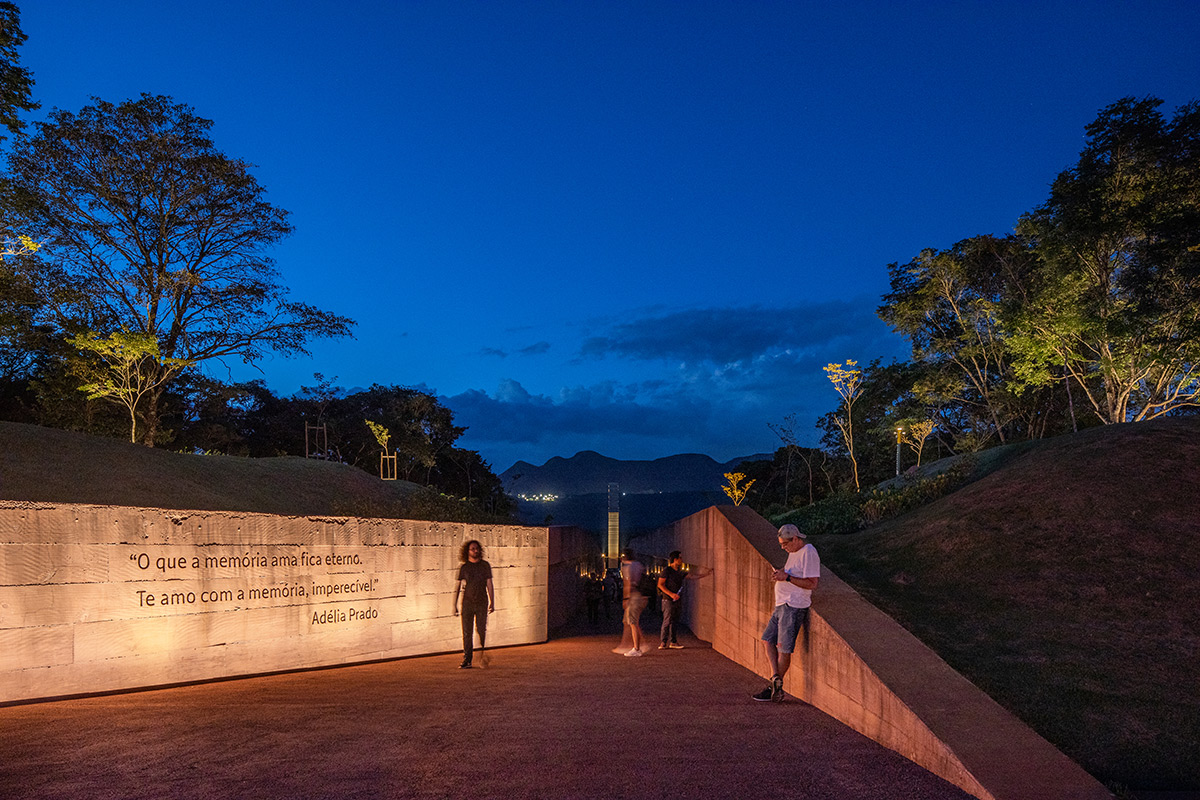
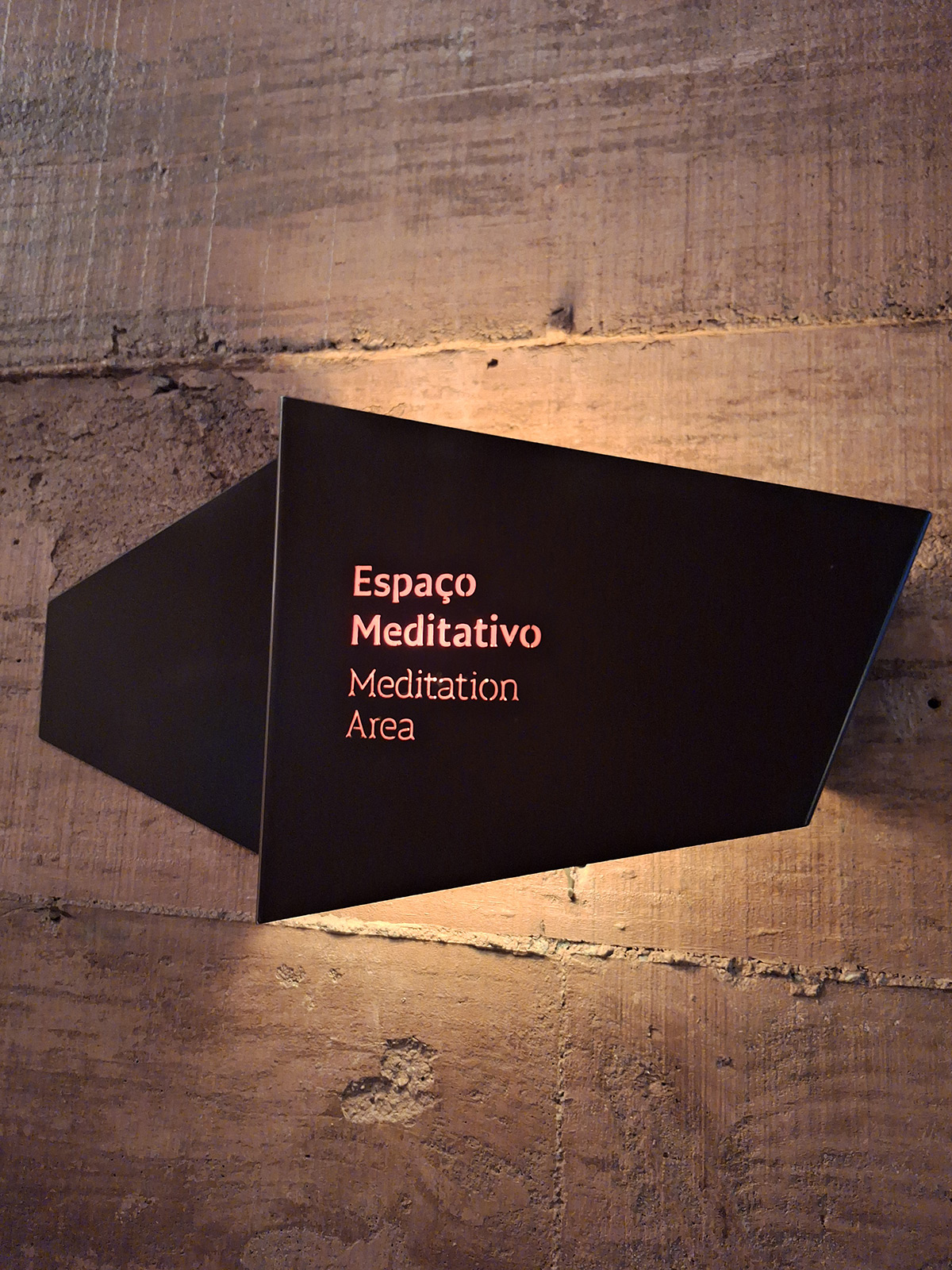
The meditation space is a large, open hall. It opens directly to the landscape. This design links people to nature. More than a room, its activities spill into an outdoor amphitheater. This extension builds a sense of togetherness. People gather, share, and connect.
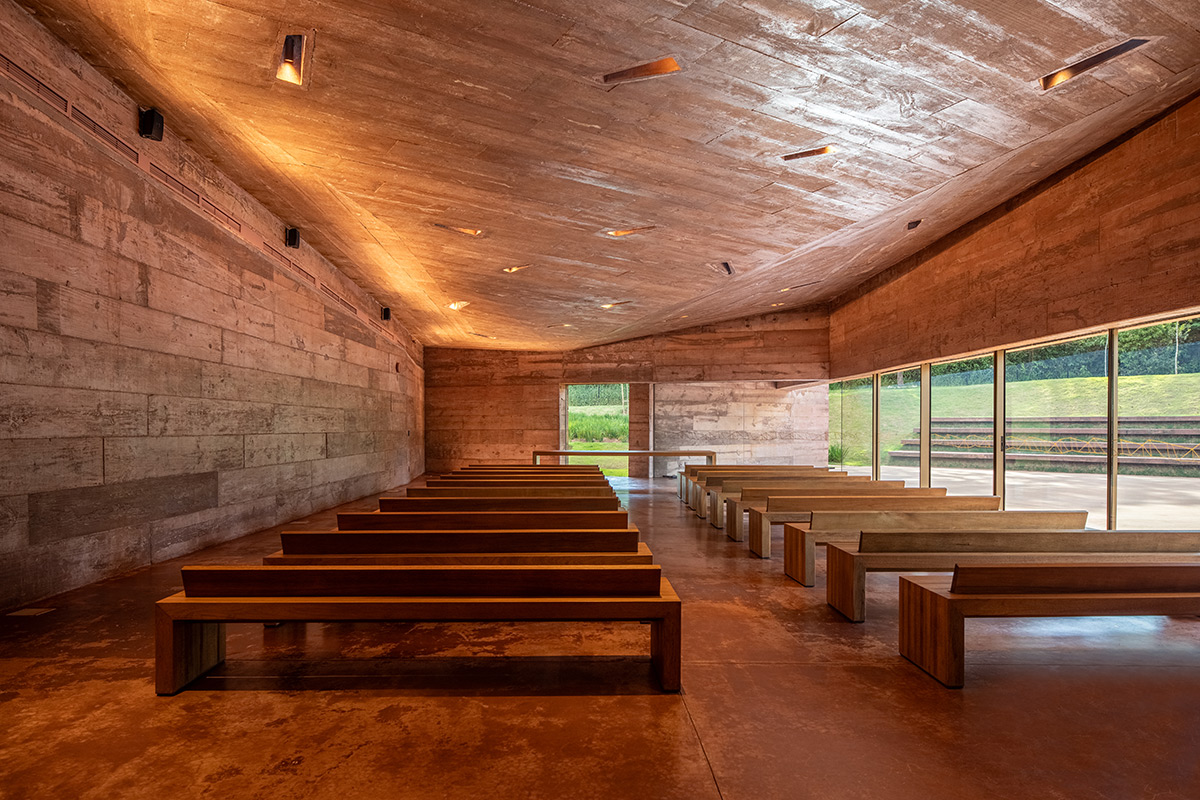
Architectural lighting shapes the mood and varies across space. Some areas use direct light. Others use soft, indirect light. These choices create calm or energy. The emotional impact is there. The space feels serene. It encourages reflection. The blend of indoor and outdoor areas fosters unity. People leave feeling grounded.
Ceiling’s skylights and quartz crystals
The ceiling’s skylights project a heart-shaped crystal cluster at 12:28 PM daily. At the exact time of the collapse. This beam of light becomes a daily reminder of the tragedy. The interplay of light and darkness invites reflection on the tragedy.
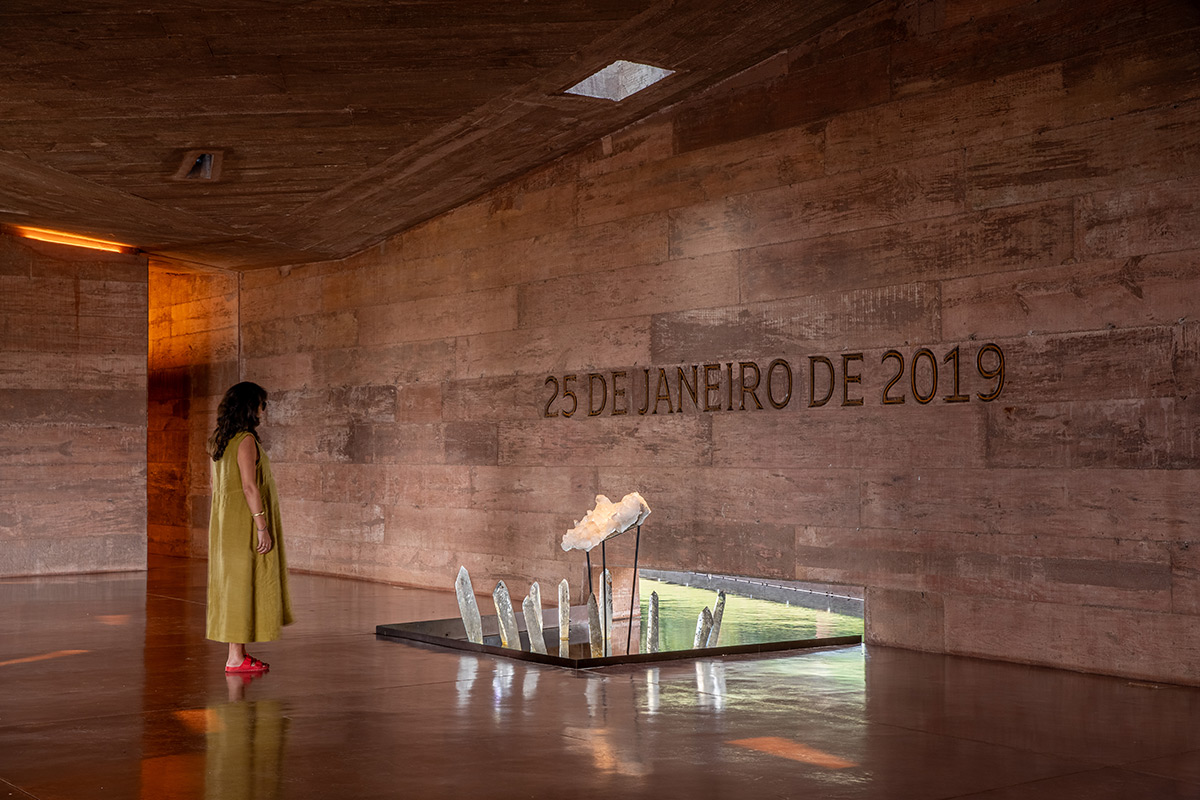
An installation of quartz crystals by Demian Quincke use also optical fibers. Water mirror by Gustavo Penn is the central feature designed to reflect the sky and surroundings, symbolizing clarity and continuity. The druse is a 65 kg formation of eleven natural quartz crystals by Demian Quincke, serving as a focal point of raw, earthy beauty. These illuminated islands placed with towering quartz crystal points up to 75 cm long. They bathed in light from optic fiber embedded in the base.
Square Sculpture and Reflective Lake
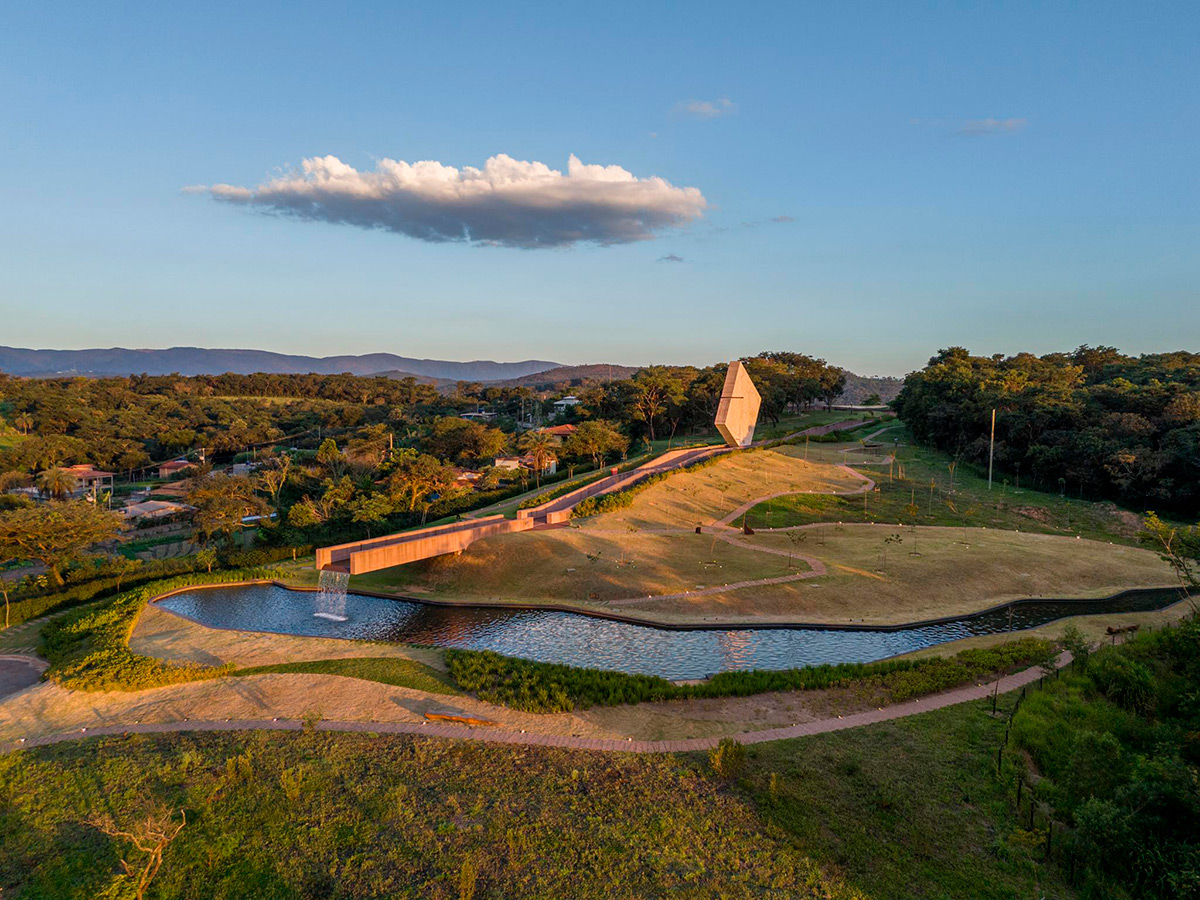
At the path’s end stands a square sculpture, a human head suspended over the lake. It represents humanity’s failure. Tears flow from its “eyes” into the water, symbolizing mourning.
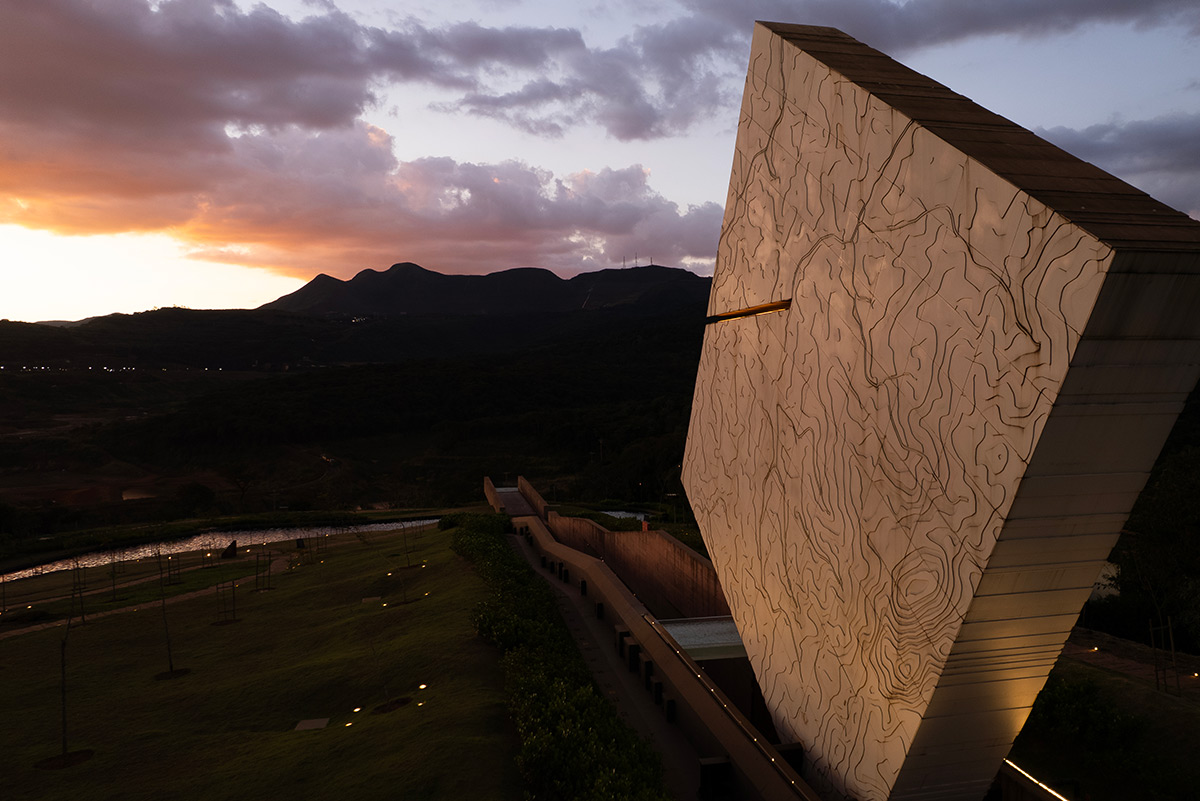
The lake itself is a mirror of memory. Fiber optics create a starry sky above it, matching the celestial map projected on the lakebed at 12:01 AM on January 25, 2019.
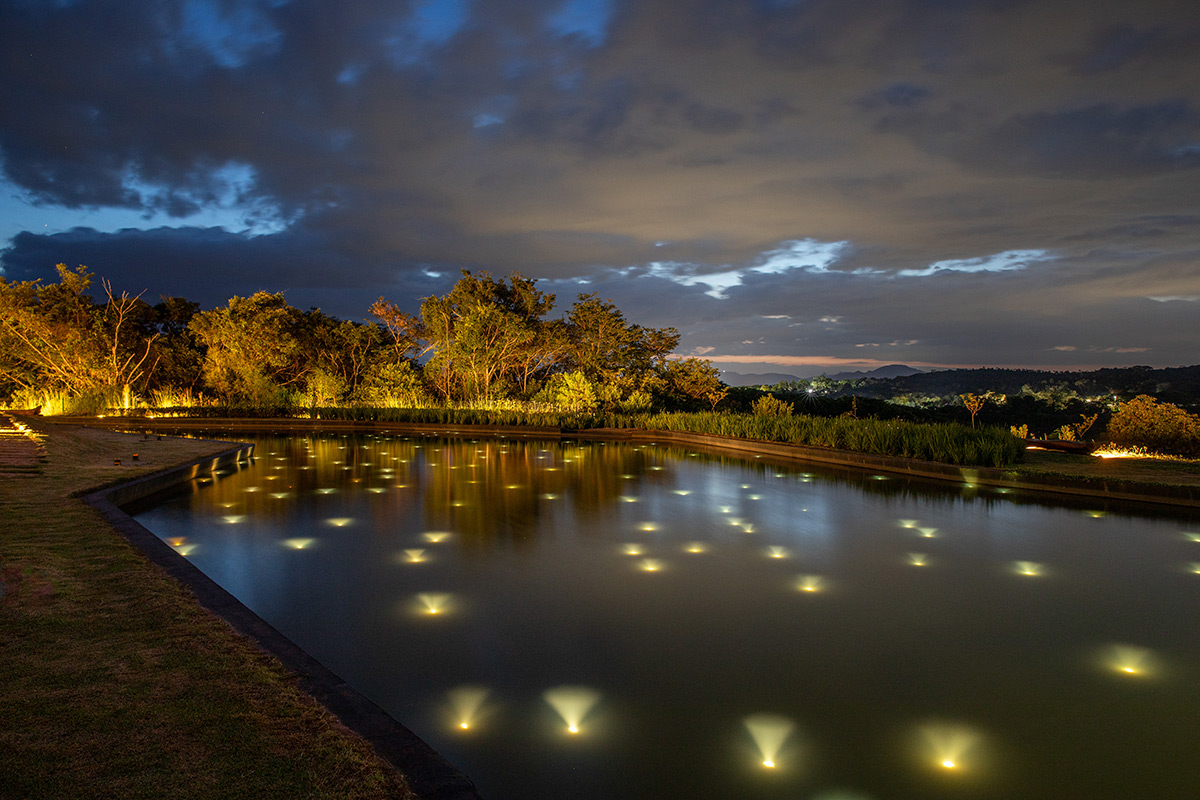
In total, 272 fiber optic terminals were layout et programmed by Mariana Novaes to create a starry sky effect. The lake’s surface reflects both day and night, blending reality with symbolism.
Sustainability in Lighting Design
Mariana Novaes wanted to honor the victims without harming the environment. The use of Brazilian-made products reduced carbon footprints. Next to that lighting design choices, fixtures from luminaires brands selected carefully like Arte em Cena, Fasa Fibra Ótica, Interlight, Lemca, Lightsource, Lumicenter, Luxion and O/M Light.
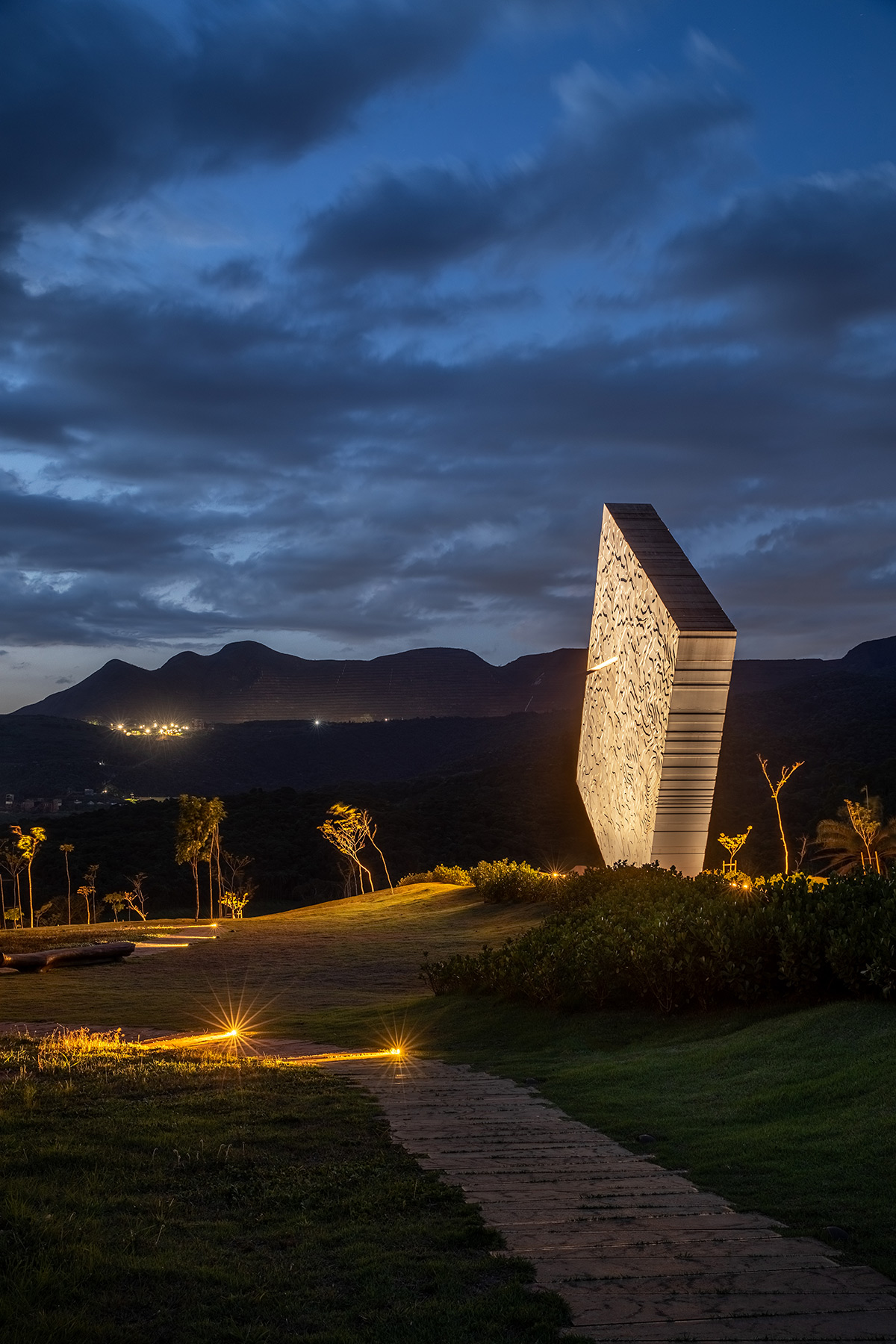
Even uplighting techniques minimize light pollution with a suitable relevant optical design. Lighting occurs only during opening hours to protect the night sky, ensuring the memorial’s glow did not disrupt local wildlife.
Light as a Tool for Healing
The Brumadinho Memorial it’s a journey through grief. Light guides visitors to confront loss yet find hope. The 272 ipê flowers, for instance, bloom annually, symbolizing resilience.
As visitors leave, they walk through a lake reflecting a starry sky. This final image—light above, memory below—leaves a lasting impact. Today, the memorial’s success lies in its ability to make the intangible tangible.
Offres d’emploi en éclairage professionnel
|
Photo at the top of the article: Memorial Brumadinho, Bresil – Architecte Gustavo Penna Arquiteto e Associados – Concepteur lumière Atiaîa Lighting Design, Mariana Novaes – Photo © Pedro Mascaro
Équipe du projet
Poursuivez votre recherche